Flood, Tsunami and Earthquake Insurance on the North Coast: What a Standard Policy Leaves Out
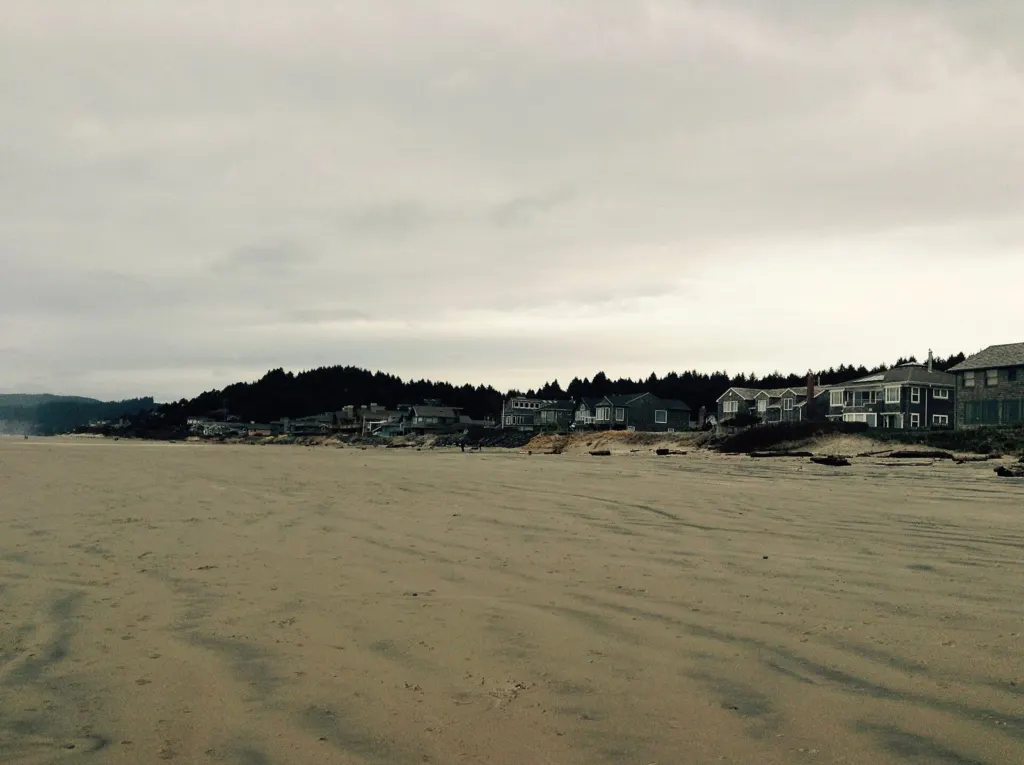
Photo: Kingofthedead / Wikimedia Commons, CC BY-SA 4.0.
Living on the North Coast means living with water and geology: winter river flooding, king tides, coastal erosion and the long-term risk of a Cascadia earthquake and tsunami. Many homeowners are surprised to learn that a standard homeowners or renters policy usually covers none of that. Here’s what’s typically excluded and how the separate coverages work.
What a standard policy usually excludes
Oregon’s Division of Financial Regulation notes that typical homeowners policies don’t cover flood damage or earthquake damage. Fire after an earthquake is often covered, but read your own policy, since insurers differ. Damage from landslides and erosion is also commonly excluded.
Flood insurance, including tsunami
Most flood insurance in the United States is sold through the federal National Flood Insurance Program (NFIP), administered by FEMA and sold by private agents. Some private insurers also offer flood policies.
- Tsunami. FEMA says NFIP policies generally cover damage from tsunami inundation, including debris carried by the water, because it counts as flooding. Damage from a tsunami-triggered landslide is treated differently.
- The 30-day wait. New NFIP policies normally take effect 30 days after purchase, with limited exceptions, such as when coverage is required for a new mortgage. Buying a policy when a storm is already in the forecast is too late.
- Limits. NFIP coverage for a home’s structure tops out at $250,000 and for contents at $100,000. Basements and some below-grade areas have limited coverage. Renters can buy contents-only policies.
- Flood maps. FEMA’s flood insurance rate maps show Special Flood Hazard Areas. Owners with federally backed mortgages there must carry flood insurance. Being outside a mapped zone doesn’t mean a property can’t flood; FEMA says a large share of claims come from outside high-risk zones.
- Pricing. NFIP premiums are now set property by property under FEMA’s “Risk Rating 2.0” method, which considers factors such as distance to water and the cost to rebuild. Clatsop County and North Coast cities take part in the NFIP, and community floodplain rules affect availability.
Check whether your address is mapped in a flood zone on FEMA’s Flood Map Service Center or through your city or county planning office.
Earthquake insurance
Earthquake coverage is usually sold as an endorsement to a homeowners policy or as a separate policy.
- Deductibles are high. They’re typically a percentage of the dwelling’s coverage, often 10% to 20% or more, rather than a flat dollar amount. A policy with a $400,000 dwelling limit and a 15% deductible means the first $60,000 of damage is yours.
- Exclusions. State regulators note that earthquake policies generally don’t cover tsunami flooding, landslides or erosion, so coast residents may need both flood and earthquake coverage.
- Retrofits. Bolting an older house to its foundation and bracing cripple walls can reduce damage. Some insurers offer discounts for retrofitted homes, and Oregon has periodically funded seismic retrofit grant programs.
Questions to ask your agent
- Is my home in a mapped flood zone, and what’s the NFIP or private flood quote?
- Does my policy include fire following an earthquake?
- What would an earthquake endorsement cost, and what’s the deductible in dollars?
- Do I need separate coverage for contents, detached structures or additional living expenses?
- Are there discounts for elevation, flood openings or seismic retrofits?
Where to get help
The Oregon Division of Financial Regulation has consumer advocates who answer insurance questions for free. FEMA’s FloodSmart site explains NFIP coverage. For hazard information, see our guides to tsunami evacuation maps and earthquake preparedness, and our explainer on property tax statements.
Sources: Oregon Division of Financial Regulation, earthquake and flood insurance consumer guides; FEMA National Flood Insurance Program and FloodSmart, including the NFIP tsunami fact sheet; FEMA Flood Map Service Center; Oregon Seismic Safety Policy Advisory Commission, Publication 18-01.

 By
By