From Tsunami Debris to Beach Cleanups: How Volunteers Watch Over the Oregon Coast
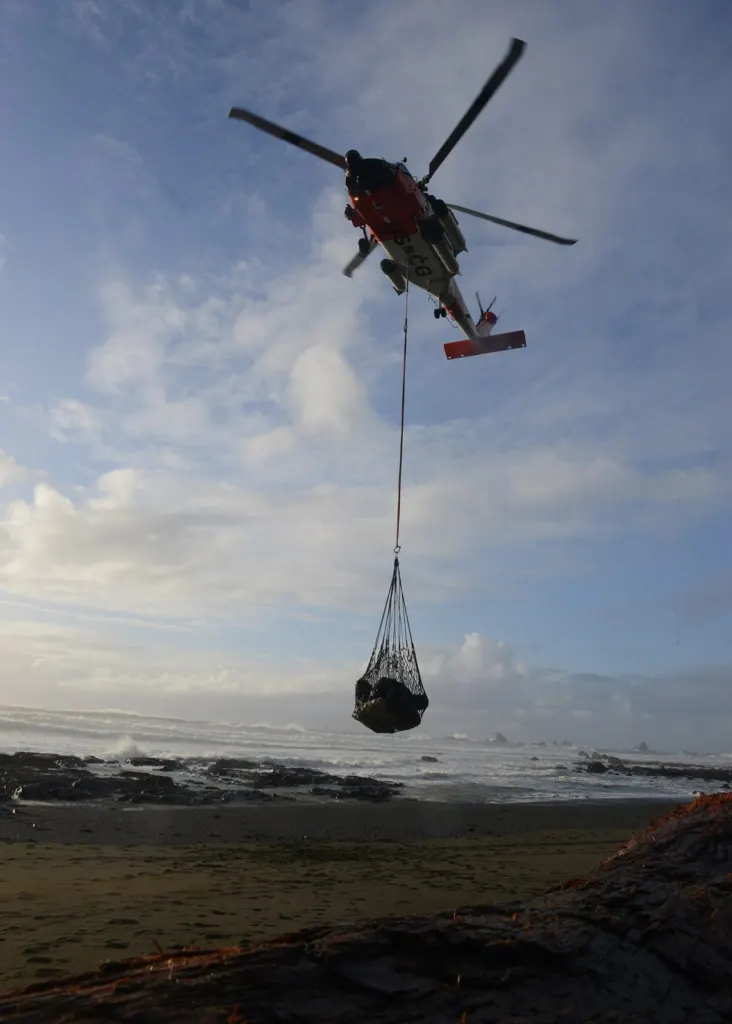
Photo: U.S. Department of Defense Current Photos Petty Officer 3rd Class Jonathan Klingenberg/U.S. Coast Guard District 13 / Wikimedia Commons, Public domain.
The March 11, 2011 earthquake and tsunami in Japan washed millions of tons of material out to sea. Over the next several years, some of it crossed the Pacific and came ashore in Oregon and Washington. That gave coastal communities, state agencies and volunteers a new job.
What reached the coast
Most tsunami debris sank or broke apart at sea, but some larger objects made the crossing:
- A concrete-and-steel dock from the port of Misawa washed ashore near Agate Beach, Newport, in June 2012. It carried living marine organisms from Japan, which raised concerns about invasive species. State crews cut it apart and removed it.
- An abandoned Japanese fishing vessel drifted for a year before the Coast Guard sank it in the Gulf of Alaska in April 2012.
- Boats, floats, buoys and other items turned up for several years afterward, and some boats reached North Coast beaches.
Oregon agencies, with NOAA’s Marine Debris Program, set up a system for reporting debris. Anything that might have living organisms on it, or that’s large or hazardous, was supposed to be reported rather than handled by beachgoers.
Volunteers on the beach
Oregon has a long history of citizen beach monitoring. CoastWatch, a program of the Oregon Shores Conservation Coalition, divides the state’s shoreline into one-mile segments that volunteers “adopt” and visit regularly. They report what they see: debris, erosion, wildlife, unusual events. After 2011, CoastWatch held community meetings with state and federal experts so volunteers would know what to look for, and its mile adopters became extra eyes on the beach.
Cleanups today
Most debris on Oregon beaches today has nothing to do with the tsunami. It’s everyday plastic, rope, fishing gear and litter. The nonprofit SOLVE organizes statewide spring and fall beach cleanups, and North Coast groups hold cleanups and stewardship events throughout the year.
Ways to help:
- Join a SOLVE or local cleanup, or adopt a CoastWatch mile.
- Carry a bag on beach walks and pack out what you find.
- Report hazardous items, such as drums, containers with unknown contents or large derelict objects, to the Oregon Parks and Recreation Department beach line or local authorities. Don’t move them yourself.
- Report stranded marine mammals to the stranding network, and keep people and dogs away from them.
Why monitoring matters
Monitoring the beach regularly shows long-term changes, such as erosion, shifting dunes and wildlife die-offs, that one-time visits miss. The tsunami debris years showed the value of a trained network already in place on the beach.
Sources: NOAA Marine Debris Program; Oregon Parks and Recreation Department; Oregon Shores Conservation Coalition (CoastWatch); SOLVE; Oregon Department of Fish and Wildlife, invasive species response, 2012.
Add North Coast Oregon as a preferred source on Google (opens in a new tab)
 By