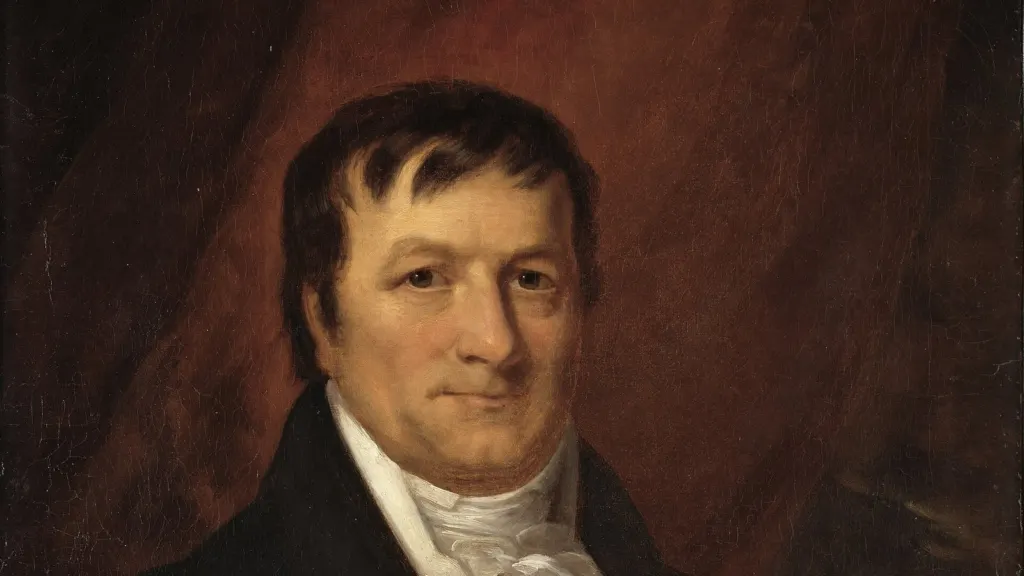
John Jacob Astor never saw the city that carries his name
Photo: John Wesley Jarvis, public domain, via Wikimedia Commons.
John Jacob Astor was born in 1763 in Walldorf, in what is now Germany, and arrived in the United States after the Revolutionary War. He built a fortune in the fur trade and later in New York real estate, and by the time of his death in 1848 he was considered the richest man in the country.
In 1810 he formed the Pacific Fur Company with the idea of establishing a trading post at the mouth of the Columbia River, the anchor of a network linking the interior fur trade with ships bound for China. He sent two expeditions: one by sea aboard the Tonquin, the other overland.
Fort Astoria
The sea party arrived in 1811 and built Fort Astoria on the south bank of the river. The venture went badly from the start. The Tonquin was destroyed later that year in an attack and explosion near Vancouver Island, and the overland party, led by Wilson Price Hunt, reached the fort in early 1812 after a brutal trip.
When the War of 1812 broke out, Astor’s partners at the fort sold it to the British North West Company in 1813 rather than risk losing it to a Royal Navy ship. It was renamed Fort George.
The legacy
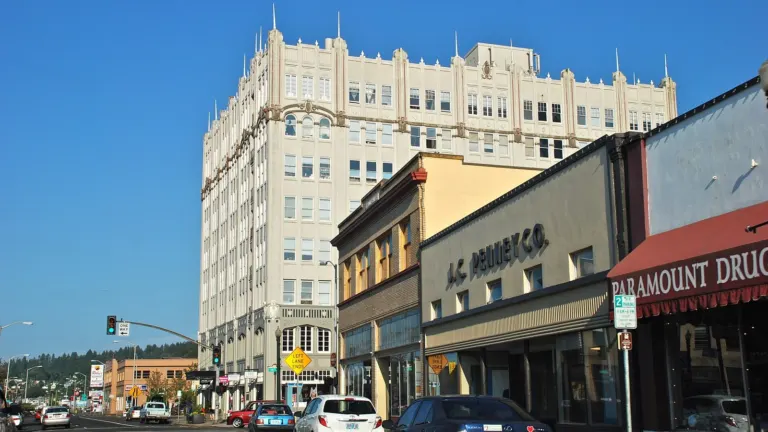
Astor never traveled to the Pacific Northwest. Still, his venture established an American presence that was used in later boundary negotiations, and the settlement that grew up around the fort became Astoria. The Astoria Column, built in 1926 on Coxcomb Hill, was funded in part by his descendant Vincent Astor and the Great Northern Railway. A reconstruction of part of the fort stands at 15th and Exchange streets.
 By
 By