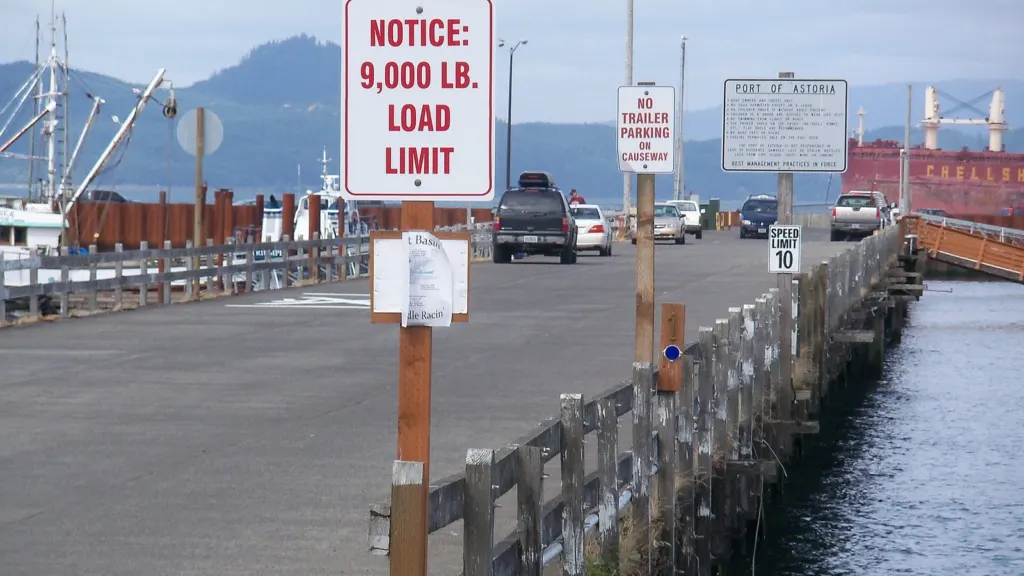
What the Port of Astoria does now that the canneries are gone
Photo: $1LENCE D00600D at English Wikipedia, CC BY-SA 3.0, via Wikimedia Commons.
The Port of Astoria was created by voters in 1910, at a time when the city expected to become a major Pacific shipping hub. That did not happen on the scale its founders hoped; Portland, upriver, captured most of the cargo trade. But the port has remained an important public landowner on the waterfront.
Today it manages Piers 1, 2 and 3 on the west end of the city, the West Basin and East End Mooring Basin marinas, and the Astoria Regional Airport in Warrenton. It also leases land and buildings to seafood processors, marine businesses and other tenants.
Cruise ships and logs
Cruise ships began calling regularly in the 2000s, and Astoria is now a common stop on Pacific Northwest and Alaska repositioning voyages, especially in spring and fall. On a ship day, several thousand passengers can come ashore. Volunteers greet them at the pier, and downtown shops, the maritime museum and the trolley see a surge in business.
Log exports have also been a large part of pier traffic in some years, with timber from the region loaded onto ships bound for Asia. That trade rises and falls with prices and overseas demand.
Aging infrastructure
The main challenge is the condition of the piers. Large parts of the port’s facilities are built on old timber pilings, and repairs have been costly. The port has faced several years of budget pressure and has gone back to state and federal programs for help with pier rehabilitation. How to pay for those repairs, and which parts of the waterfront to prioritize, remains a regular topic for the port commission.
More in Business

Carnegie Mellon University Names Jason Brown Next Director and CEO of the Software Engineering Institute
 By Joel Koskinen ·
An Astoria couple built the food cart bar they kept finding everywhere but home
By Joel Koskinen ·


Prestigious ISTE Seal Opens New Doors for Classroom Learning as KOIN Continues its Transformational Rollout with uReport
By Joel Koskinen ·