North Coast Land Conservancy at 40: The Seaside Land Trust Behind 36 Habitat Reserves
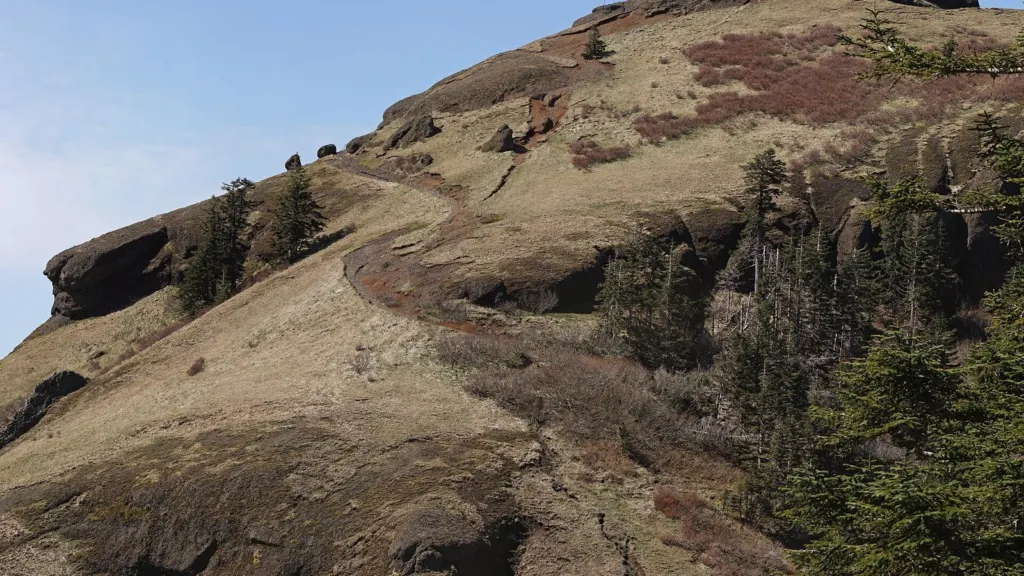
Photo: Walter Siegmund, CC BY-SA 3.0, via Wikimedia Commons.
Forty years ago, a group of North Coast residents set out to protect land without picking fights. They wanted to sit down with timber companies, cities and landowners and look for deals that worked for everyone. That group became North Coast Land Conservancy, and this year the Seaside-based land trust is marking its 40th anniversary.
The nonprofit says that over four decades and roughly 100 projects it has helped conserve about 14,000 acres in Clatsop, Tillamook and Lincoln counties. That work includes 36 habitat reserves it bought outright, conservation easements on private land, and help for cities and agencies expanding state and national parks and protecting drinking-water watersheds. NCLC celebrated the milestone on Oct. 3 with a free party at its Circle Creek Conservation Center south of Seaside.
A cooperative start
According to the organization’s history, people from communities along the North Coast began meeting in 1985 to consider a different approach, one that would pursue conservation “cooperatively rather than confrontationally.” By 1986 the group had a name, an eight-member board and a logo featuring the marsh wren, a small wetland bird.
Neal Maine, NCLC’s founding executive director, described the approach this way in a quote the conservancy still features: “How do you sit down at the table with a timber company and carry on dialogue that doesn’t include threats of lawsuits but is instead a facilitation? We figured it out.”
First deals: Saddle Mountain and Wahanna Marsh
The first opportunity came in 1991. NCLC facilitated a land swap that conserved a 15-acre parcel of private timberland next to Saddle Mountain State Park, known for its rare plants. The conservancy says it was the first biodiversity-based conservation proposal that the state and federal agencies involved had seen.
That same year, NCLC made its first land purchase, Wahanna Marsh in Seaside. The deal conserved a saltmarsh and also helped create a place for Seaside children to play baseball. The organization describes it as the first in a pattern of “win-win” transactions.
Today NCLC says its portfolio includes more than 61 properties it owns outright and 15 conservation easements, and that it has completed more fee-title acquisitions than any other local land trust in Oregon. It works along the coast from the Columbia River to Siletz Bay and is nationally accredited.
The director who started in the field
Katie Voelke has led the conservancy since 2008. As The Astorian reported in January, she studied biology, moved to the North Coast with her husband in 2003 and did field work for the U.S. Forest Service, the Bureau of Land Management and the Oregon Department of Fish and Wildlife. In 2005 she joined NCLC as its first stewardship director, working alongside Maine, before becoming executive director three years later.
Voelke has framed much of the group’s recent work around connecting protected land rather than adding isolated parcels. “This is about connectivity,” she told The Astorian. “Most remaining high-quality habitat exists as a patchwork and the unprotected pieces between them are often essential to the movement of species and the natural process that sustain ecosystems.”
The Rainforest Reserve
NCLC’s largest single project is the Rainforest Reserve in the Coast Range between Cannon Beach and Manzanita. The conservancy completed the purchase in October 2021 after a five-year fundraising campaign and describes it as a 3,500-acre reserve. On Jan. 7, 2026, it added about 80 acres on the reserve’s southeastern edge to further protect Onion Peak.
The reserve sits next to Oswald West State Park and above Cape Falcon Marine Reserve. According to NCLC, it is part of an unbroken conservation corridor of about 32 square miles that runs from 3,000-foot peaks down to Short Sand Beach and the nearshore ocean. Residents of the reserve include Chambers paintbrush, coho salmon, black bears and elk, and Onion Peak shelters rare species such as the ancient black petaltail dragonfly. The conservancy says some species on these coastal peaks exist nowhere else. NCLC says it does not let outside agencies or businesses log its conserved lands, does not allow road building on its habitat reserves and is decommissioning old roads in the Rainforest Reserve.
Closer to town: Circle Creek and Blind Slough
Much of the conservancy’s work is within a few miles of where people live. In December 2025 it added about 24 acres to its 364-acre Circle Creek Habitat Reserve inside Seaside’s southern city limits, land that includes about half a mile of Circle Creek, which ODFW considers essential salmon habitat. A week later, a private landowner donated nearly 18 acres along Warren Slough to expand the roughly 900-acre Blind Slough Habitat Reserve near Knappa, where some Sitka spruce trees are more than 400 years old, The Astorian reported.
Voelke told the paper the organization has also been learning from tribal members and looking for ways to support land return and acquisitions for tribal ownership.
Forty years on
The anniversary celebration included a guided walk at Circle Creek, a talk on the group’s history by Voelke, live music and a seasonal blueberry beer made with Public Coast Brewing Co., which grows the fruit on its Public Coast Farm.
“It has been a privilege and a joy to pursue our mission of ‘conserving coastal lands and waters’ for 40 years, but that’s only been possible by finding common ground and building relationships with thousands of individuals, community leaders, and partnership organizations in our North Coast community,” Associate Director Jon Wickersham said in the conservancy’s anniversary announcement.
North Coast Land Conservancy is based at the Circle Creek Conservation Center, 32825 Rippet Road in Seaside. Information on its reserves, volunteer days and guided walks is available at nclctrust.org.
More in Energy & Environment
Federal Permit Sets 70-Year Rules for Tillamook and Clatsop State Forests
 By Corey Lindqvist ·

NRC Renewed Wolf Creek Nuclear Plant’s License for 20 More Years: What the Decision Covered
By Corey Lindqvist ·

The Warrenton LNG Fight: How a Decade-Long Energy Proposal Ended on the Columbia
 By Dana Whitcomb ·