Salmon fishing reopens Monday on parts of the Naselle and Willapa rivers
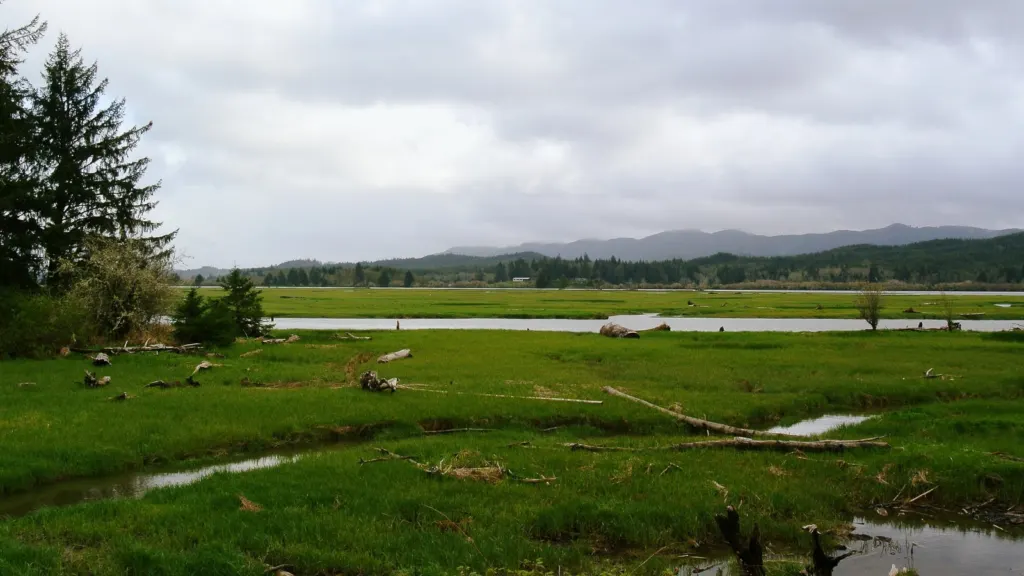
The Naselle River seen from U.S. Highway 101, a few miles northwest of Naselle. Photo: Adbar / Wikimedia Commons, CC BY-SA 3.0
Anglers on the Washington side of the river mouth get salmon water back this week. The Washington Department of Fish and Wildlife is reopening salmon fishing on the lower Naselle River and much of the Willapa River starting Monday, Nov. 23, about a month after both were shut down over low water and a weak early look at the coho run.
The change comes through an emergency rule filed by the department’s Coastal Region. WDFW said updated estimates of coho returning to hatcheries, along with spawner surveys on the rivers, now suggest the run may meet its management objectives, which leaves room for a limited harvest.
The Chinook Observer first reported the reopening on Friday.
Where the rivers open
On the Naselle, salmon fishing opens from the U.S. Highway 101 Bridge upstream to the Crown Mainline Bridge, which anglers know as the Salme Bridge.
On the Willapa, the opening runs from the mouth of the river, marked by the City of South Bend boat launch, upstream to the state Highway 6 Bridge near Lebam. That takes in the water through Raymond and the long valley stretch along Highway 6.
Above the Salme Bridge on the Naselle, up to the North Fork, the river returns to its regular game fish rules, but salmon fishing is not part of the reopening there.
The salmon rules
The salmon season on both rivers runs through Jan. 31. The rules are the same on each:
- Minimum size: 12 inches.
- Daily limit: six salmon, with no more than one adult in the six.
- Release all wild Chinook and all wild coho. Only hatchery fish, marked by a clipped adipose fin, can be kept.
Game fish seasons on both rivers go back to the permanent rules in the state’s sport fishing pamphlet, and that part of the emergency rule stays in place through March 31, 2027.
The department reminded anglers that the regular gear rules, night closures and designated closed waters in the pamphlet still apply. The emergency rule changes the season and limits, not those restrictions.
Why the rivers closed in the first place
WDFW closed salmon fishing on the two rivers in October, citing low river flows and concern that too few coho were coming back. Low water tends to hold fish in the bay and the lower reaches of a river, where they are easier to catch and slower to reach spawning grounds and hatchery traps.
The department’s newer counts at hatcheries and on spawning grounds look better than the early picture. WDFW said conditions can still change, and it could restrict fishing again if returns come in below what it now expects.
What anglers should know before they go
The rivers are in Washington, so Oregon anglers crossing the Astoria-Megler Bridge need a Washington fishing license and a catch record card for salmon. Rules on these rivers change often during the season, so it is worth checking WDFW’s emergency rules page the morning of a trip.
Questions about the rule can go to WDFW’s Coastal Region office in Montesano at 360-249-4628.
Fishing news on both sides of the Columbia has been mixed this fall. Oregon’s commercial crab season is delayed to at least Dec. 16, and Clatsop razor clam beaches have stayed closed because of domoic acid. Forecasters are also watching a strong El Niño that could shape conditions on coastal rivers this winter.
More coverage of fish, wildlife and the outdoors is in our Energy & Environment section.
Add North Coast Oregon as a preferred source on Google (opens in a new tab)
 By
