Clatsop Community College enrollment jumps 23% as Tillamook Bay’s falls 19%
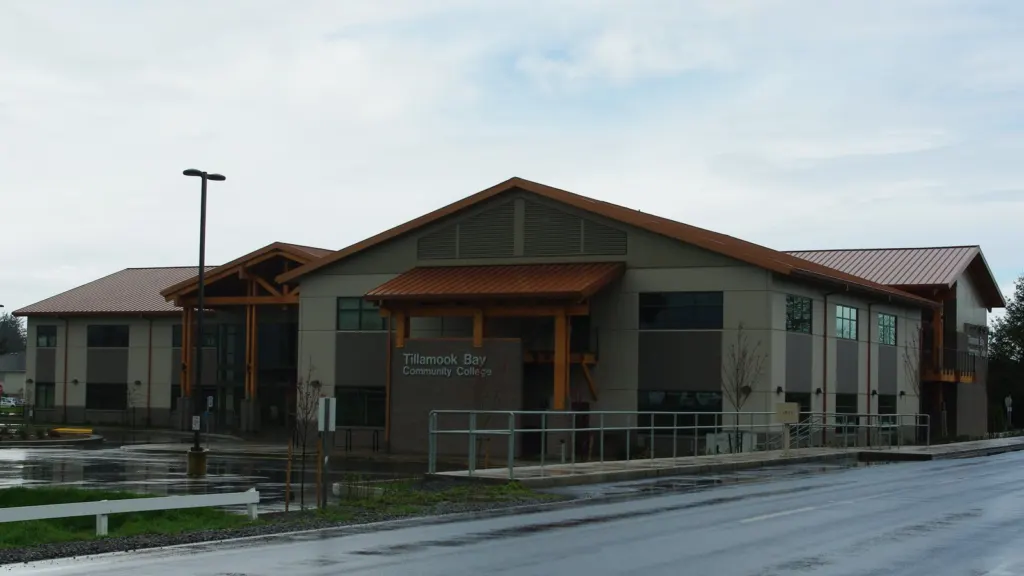
Tillamook Bay Community College in Tillamook. Photo: M.O. Stevens / Wikimedia Commons, CC BY-SA 3.0
Clatsop Community College had 999 students enrolled this fall, up from 811 a year ago, while Tillamook Bay Community College fell from 1,032 students to 840. Those two numbers, from a state report released this week, are the biggest percentage swings, up and down, among Oregon’s 17 community colleges.
The Fall 2026 Oregon Public Institution Enrollment report, published Nov. 18 by the Higher Education Coordinating Commission’s Office of Analytics and Strategy, counts students at the colleges and the public universities in the fall term. Statewide, community college enrollment fell 2.9%, from 98,393 to 95,583. The commission says that is the first decline after three years of growth. OPB reported on the statewide numbers Friday.
Clatsop up 23%, Tillamook Bay down 19%
Headcount at Clatsop rose by 188 students, or about 23%. No other Oregon community college grew by more than about 4% in percentage terms. Clatsop was one of only five colleges where headcount went up, along with Chemeketa, Lane, Rogue and Southwestern Oregon.
Tillamook Bay lost 192 students, a drop of about 19%. That was the steepest percentage decline in the state, ahead of Umpqua (down about 14%) and Oregon Coast Community College in Newport, which went from 813 to 724 students (down about 11%).
Put the two North Coast colleges together and the region barely moved: 1,843 students last fall and 1,839 this fall.
The commission’s report also notes that small schools swing more. “At small colleges, a few students can lead to a large difference, making larger percentage changes more common there,” it says. The report gives counts for each college but does not explain why any single school went up or down.
Full-time equivalent tells a different story
The report also tracks full-time equivalent enrollment, or FTE, which turns total class hours into a count of full-time students. The commission takes all the clock hours students are enrolled in and divides by 510. Headcount tells you how many people signed up. FTE tells you how much coursework they are taking.
By that measure the gains and losses were smaller. Clatsop’s FTE rose from 233 to 241, about 3%. That means the average Clatsop student is carrying a lighter course load than a year ago. Tillamook Bay’s FTE fell from 190 to 166, about 13%, which is a smaller drop than its headcount.
Across all community colleges, FTE fell 2.1%, to 22,186. FTE went down at 13 colleges and up at four.
The longer view
Even with three years of growth behind it, community college enrollment in Oregon is still well below where it was before the pandemic. The report puts this fall’s headcount 17% below 2019 and FTE 13% below.
The public universities are also shrinking. They enrolled 97,077 students this fall, down 2.5% from 99,610. Counting both sectors, enrollment at Oregon’s public colleges and universities fell 2.7%.
The figures are aggregate counts that each college reports to the state. Anyone enrolled at more than one school in the fall is counted at every school they attend. The commission links to college-by-college headcount and FTE data from the report.
What it means locally
Clatsop’s growth comes as its finances look steadier. S&P Global Ratings revised the college’s outlook to stable and affirmed its A- rating. The college runs its main campus in Astoria and the MERTS maritime and technical campus at Tongue Point.
Tillamook Bay Community College is based in Tillamook. The college numbers follow recent state data showing North Coast K-12 attendance is still below pre-pandemic levels, even after improving last year.
For more education and county news, see our News section.
Add North Coast Oregon as a preferred source on Google (opens in a new tab)
More in News
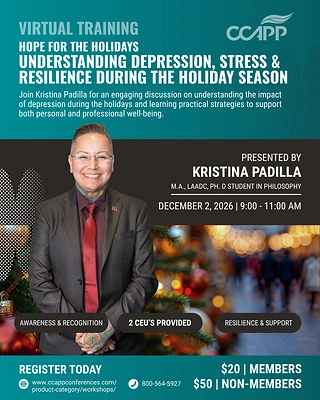
CCAPP Opens Registration for “Hope for the Holidays” Training on Depression, Stress, and Resilience

Brayton Purcell Attorney Featured in San Francisco Chronicle Opinion Backing California Artificial Stone Ban, Calling on Other States to Follow


Oregon confirms its first human bird flu case linked to dairy cattle; no other herds have tested positive
 By Corey Lindqvist ·