Coast Range’s Columbia torrent salamander proposed as threatened; comments due Jan. 29
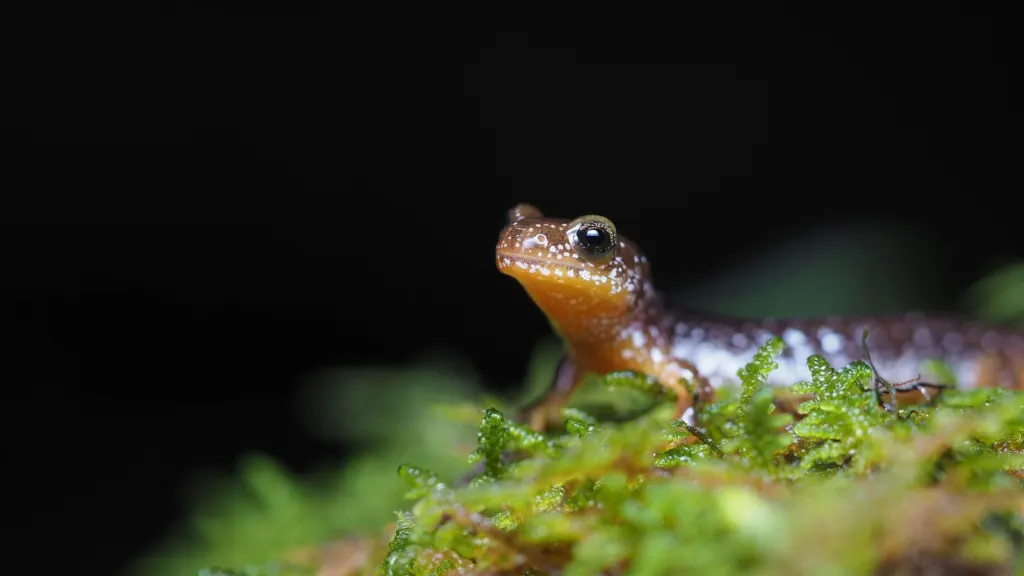
A Columbia torrent salamander. Photo: Chris Cousins / U.S. Fish and Wildlife Service / Wikimedia Commons, public domain
A small salamander that lives in the cold headwater creeks of the Coast Range is in line for federal protection. The U.S. Fish and Wildlife Service on Friday proposed listing the Columbia torrent salamander and its Cascade Range cousin, the Cascade torrent salamander, as threatened under the Endangered Species Act.
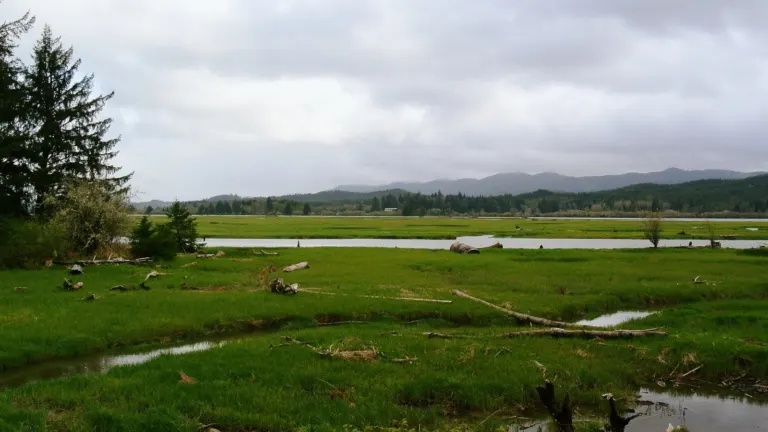
The Columbia torrent salamander is found only in the Coast Range of northwestern Oregon and southwestern Washington, a range that takes in the forested hills of Clatsop, Tillamook and Pacific counties. Torrent salamanders are semi-aquatic and live in and around cool seeps, small streams and waterfalls under conifer forest.
The agency’s proposed rule, scheduled to publish in the Federal Register on Monday, Nov. 30, opens a 60-day comment period. Comments are due by 11:59 p.m. Eastern time on Jan. 29, 2027, through regulations.gov under docket FWS-R1-ES-2024-0121. Requests for a public hearing must be made in writing by Jan. 14.
A petition 14 years in the making
The proposal is the agency’s answer to a July 2012 petition from the Center for Biological Diversity that asked for protection of 53 reptiles and amphibians, both torrent salamanders among them. Fish and Wildlife found in September 2015 that listing might be warranted and opened a status review. Friday’s proposal is the formal finding that it is.
The agency says the two species are likely to become endangered in the foreseeable future, pointing to more severe heat, drought and wildfire across their range along with habitat loss from roads, culverts and timber harvest.
For the Columbia torrent salamander, the rule’s numbers explain why forestry sits at the center of the debate. About 68% of the species’ range is on private land, 25% on state land and 5% in federal ownership, according to the proposal. An estimated 95% of the range, roughly 3,698 of 3,895 square miles, is under land-use designations where timber harvest is a primary goal. The agency estimates about 93% of the Columbia salamander’s analysis units are not protected from harvest.
The species is not in trouble everywhere. Of 121 analysis units the agency studied, 72 rated as highly resilient and 26 as moderately resilient. That spread is why the agency proposed “threatened” rather than “endangered.”
The North Coast’s history shows up in the analysis too. The rule says the Tillamook Burn fires between 1931 and 1951 fragmented the landscape, and that genetic connectivity among Columbia torrent salamanders is still lower in the burned area because of habitat breakup and reduced canopy, made worse by the logging and road building that followed.
What a listing would and would not do
If the rule is finalized as written, it would prohibit “take” of both species, which under federal law covers harming or killing them, including incidentally, except for activities the rule carves out. Its 4(d) provisions would exempt stream-restoration work that replaces old pipe culverts with open-bottom culverts or bridges sized for 100-year floods, when done under an approved conservation plan for the salamanders and Fish and Wildlife best practices.
The agency is not proposing critical habitat for now, saying it is “not determinable at this time.”
The proposal also credits state rules already on the books. It says the updated Oregon Forest Practices Act rules that came out of the Private Forest Accords should improve stream buffers, slope stability, culvert design and road drainage, and it expects a planned habitat conservation plan for private forests under the accords to cover the Columbia torrent salamander. It lists the state’s habitat plan for western Oregon state forests, including the Clatsop and Tillamook, as another expected help. We covered the federal permit behind that state forest plan in October.
The salamander proposal is one of several Endangered Species Act decisions Fish and Wildlife released Friday. In the same batch the agency said the streaked horned lark, a ground-nesting bird of Oregon and Washington prairies and river islands, should keep its threatened status. It is also part of a run of wildlife listing questions touching the coast, including the lawsuit over relisting gray whales.
More coverage of North Coast forests, rivers and wildlife is in our Energy & Environment section.
Add North Coast Oregon as a preferred source on Google (opens in a new tab)