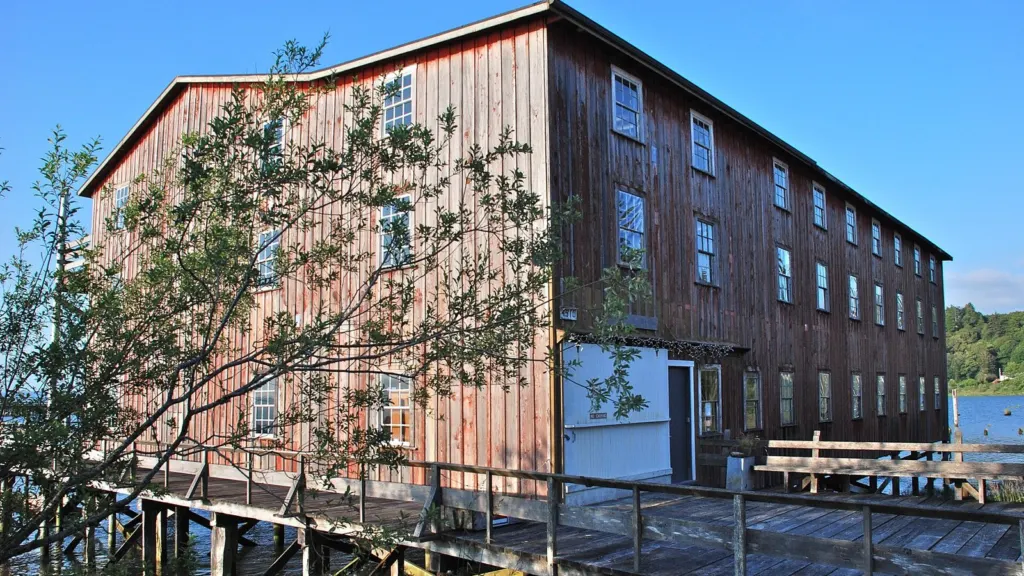
The Finnish fishermen who built their own cannery in Astoria
Photo: Steve Morgan, CC BY-SA 3.0, via Wikimedia Commons.
In the late 1800s, Astoria’s Uniontown neighborhood was home to so many Finnish immigrants that it was called “Finntown” by some. They came to fish for salmon on the Columbia and work in the canneries, and they brought with them traditions of saunas, socialist halls and cooperative organization.
Fishermen in that era sold their catch to cannery owners who set prices. In 1896, gillnetters on the river went on a long strike over pay, and the strike was broken. The next year, many of them, Finnish and Scandinavian alike, formed the Union Fishermen’s Cooperative Packing Company in Astoria.
How it worked
The cooperative built and operated its own cannery, so members could process and sell their own fish. Members owned shares, and profits went back to the fishermen. It became one of the most successful cannery operations on the river and lasted for decades, outliving many private competitors.
The cooperative’s net racks and boat buildings in the Alderbrook area of east Astoria are still standing, part of the city’s surviving waterfront industrial architecture.
What remains
Salmon runs declined through the 20th century due to overfishing, dams and habitat loss, and the canneries closed. The Finnish community in Astoria assimilated, but its influence remains. The Suomi Hall still stands, local saunas recall the Finnish tradition, and the Astoria Scandinavian Midsummer Festival is held every June.
The cooperative’s story is one of the clearer examples in Oregon history of workers taking a business into their own hands.
Add North Coast Oregon as a preferred source on Google (opens in a new tab)
 By