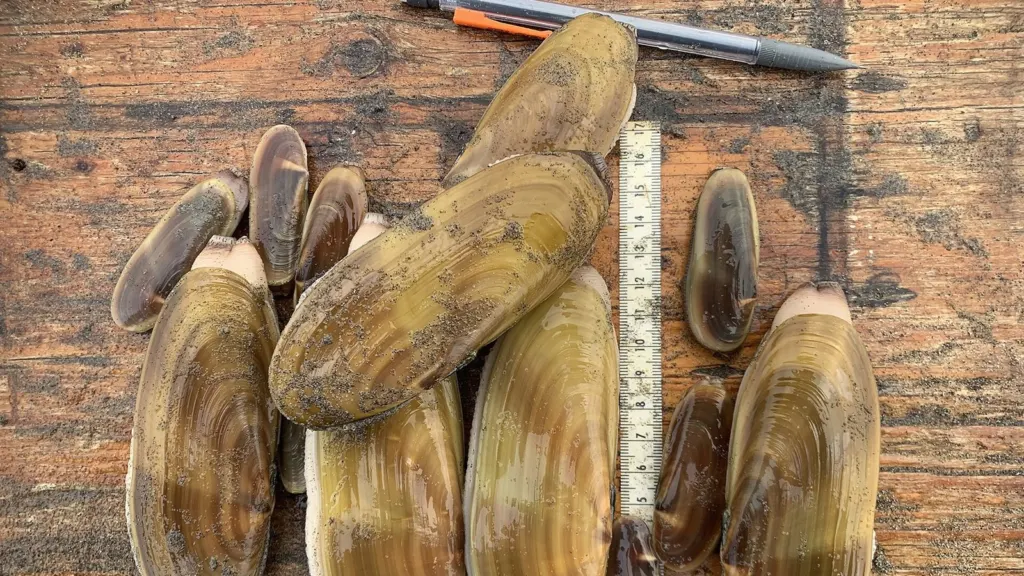
Clatsop razor clam beaches stay closed as domoic acid stays high
Photo: Oregon Department of Fish & Wildlife, CC BY-SA 2.0, via Wikimedia Commons.
The razor clam beaches between Seaside and the Columbia River have been off-limits for four weeks, and the latest test results suggest they won’t reopen soon. Domoic acid in clams sampled at Sunset Beach on Oct. 19 measured 96 parts per million, nearly five times the level at which Oregon closes a harvest area, according to the Oregon Department of Agriculture’s biotoxin lab results.
At the same time, the ocean crab season for recreational crabbers is in its annual fall pause. Anyone heading to the North Coast this weekend with a shovel or a crab ring needs to know what is open and what isn’t.
Razor clams: closed from Washington to California
ODA and the Oregon Department of Fish and Wildlife closed razor clamming coastwide on Oct. 2, after samples came back above the safety threshold. The closure includes the Clatsop beaches, the 18-mile stretch that accounts for most of Oregon’s razor clam digging.
The trend at the Sunset Beach sampling site has been heading the wrong way all fall. ODA’s results show 10 ppm on Sept. 14, 44 ppm on Oct. 2 and 96 ppm on Oct. 19. The closure limit is 20 ppm. The state’s next round of sampling was scheduled for the week of Oct. 26.
Reopening takes more than one good test. Under Oregon’s rules, an area closed for biotoxins needs two consecutive results below the limit before harvest resumes. ODA tests at least twice a month when tides and weather allow, which means that even if levels start falling now, a reopening is likely weeks away.
What domoic acid is
Domoic acid is a natural toxin produced by marine algae of the genus Pseudo-nitzschia. When those algae bloom, filter feeders such as razor clams and mussels concentrate the toxin in their tissue. Cooking or freezing does not destroy it.
In people, eating contaminated shellfish can cause amnesic shellfish poisoning. Mild cases bring nausea, vomiting and diarrhea. Severe cases can cause confusion, memory loss, seizures and, rarely, death. That is why the state closes beaches on test results rather than waiting for anyone to get sick.
Razor clams are especially slow to clear domoic acid. They can hold onto it for months after a bloom fades, which is part of why North Coast closures have sometimes stretched through an entire season.
Crabbing: bays yes, ocean no
Ocean waters are closed to recreational crabbing from Oct. 16 through Nov. 30 every year. That closure is a regular part of the season, not a biotoxin response. Bays, beaches, estuaries, tide pools, piers and jetties stay open for crabbing year-round unless closed for toxins.
Biotoxin testing currently has crab open coastwide. Mussels and bay clams are also open coastwide, though ODFW has issued a bay clam harvest advisory for the Alsea Bay estuary on the central coast.
Results in local bays have been mixed. ODFW’s Oct. 29 crabbing and clamming report rated Tillamook Bay slow from both boats and docks, while Netarts was fair from both. Fall rains can push fresh water into the bays and send crab out toward saltier water, so a good day one week can turn slow the next. ODFW also notes that many male crab caught this time of year are soft-shelled after molting and still filling with meat.
Crabbers in estuaries may also pull up European green crab, an invasive species. ODFW says to look for three bumps between the eyes and five spines down each side of the shell, since color isn’t reliable. The daily limit for green crab is 35 per person, of any size or sex.
Before you go
Conditions can change between sampling rounds. The state asks every harvester to call the Shellfish Safety Hotline at 1-800-448-2474 or check ODA’s closures page before digging or crabbing. Harvesters 12 and older need an Oregon shellfish license.
For bay clammers, fall and winter low tides suitable for digging fall in the evening. ODFW recommends bringing a reliable light, avoiding unfamiliar spots and not clamming alone in the dark.
More in Energy & Environment
Federal Permit Sets 70-Year Rules for Tillamook and Clatsop State Forests
 By Corey Lindqvist ·
North Coast Land Conservancy at 40: The Seaside Land Trust Behind 36 Habitat Reserves
 By Megan Harlow ·


NRC Renewed Wolf Creek Nuclear Plant’s License for 20 More Years: What the Decision Covered
By Corey Lindqvist ·