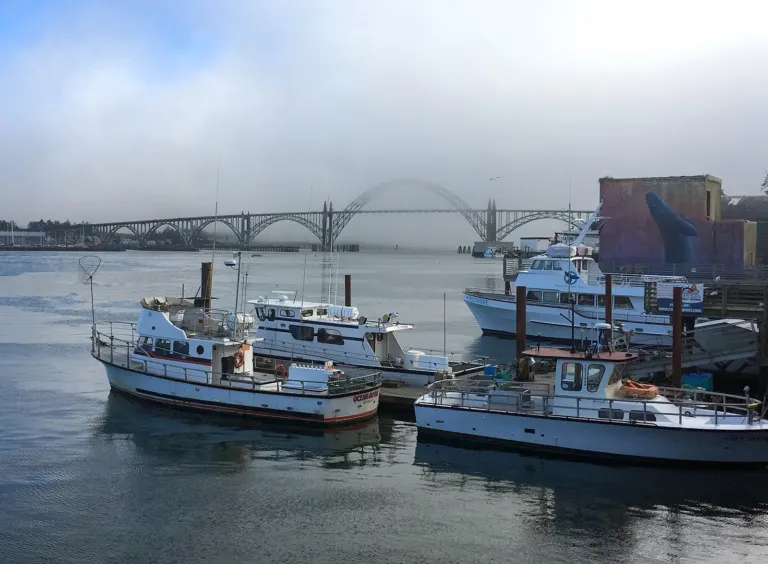
The Columbia River Bar Pilots: Who Guides Ships Across the ‘Graveyard of the Pacific’
Photo: Unknown author / Wikimedia Commons, CC BY-SA 3.0.
The mouth of the Columbia River is one of the most dangerous river entrances in the world. The river empties into the Pacific through a shifting stretch of sandbars, where strong ebb currents meet incoming ocean swells, and the area’s long record of wrecks earned it the name “Graveyard of the Pacific.” Every large commercial ship that crosses it has a licensed bar pilot on the bridge.
What a bar pilot does
A pilot is a mariner with local expertise who boards a ship and directs its navigation through a specific stretch of water. The pilot doesn’t take legal command from the captain but advises on, and in practice directs, the ship’s course and speed through the hazard.
The Columbia River Bar Pilots, based in Astoria, handle the crossing between the open ocean and the Astoria area. There, ships heading upriver to Longview, Kalama, Vancouver and Portland usually switch to a Columbia River pilot for the roughly 100-mile river passage. The two pilot groups are separate organizations.
Boarding at sea
Getting a pilot onto a ship offshore is the hardest part of the job. Bar pilots board by climbing a rope pilot ladder from a pilot boat onto the side of a moving ship. In rough weather they’re often lowered onto the deck from a helicopter. The Columbia River Bar Pilots began testing helicopter transfers in 1998, the first pilot group in the United States to do so, and now move most pilots to and from ships by air. That lets them work in seas too dangerous for a boat.
When the bar is too rough even for that, ships may wait offshore until conditions improve.
Licensing and oversight
Pilotage on the Columbia is regulated by the state. In Oregon, the Oregon Board of Maritime Pilots licenses pilots, sets training and qualification standards and investigates incidents. Pilotage fees are set through a public rate-setting process. Pilots generally come to the job with years of experience as ship’s officers or captains, then go through a long training program on the bar itself.
Pilotage at the river mouth is one of the region’s oldest regulated trades, dating back to Oregon’s territorial era in the mid-1800s.
Help in emergencies
Pilots and their boat crews are often the closest skilled mariners when something goes wrong near the river mouth or the Astoria waterfront. They’ve assisted in rescues alongside the U.S. Coast Guard, whose Sector Columbia River, Air Station Astoria and Cape Disappointment stations cover the area. In one rescue, a crew aboard a pilot vessel helped save a person stranded in the river near Astoria in late 2012, and the Coast Guard later honored them with Public Service awards. Rescues like that show how the river’s working mariners and the Coast Guard depend on each other.
Why it matters to the local economy
The Columbia River system carries grain, wood products, minerals, autos and other cargo, and much of that trade crosses the bar. Safe, reliable pilotage keeps the shipping channel usable and supports jobs on the Astoria waterfront.
Sources: Oregon Board of Maritime Pilots; Columbia River Bar Pilots; U.S. Coast Guard Sector Columbia River; Columbia River Maritime Museum, Astoria.

 By