A near-record El Niño is building, and North Coast beaches still remember 2015-16
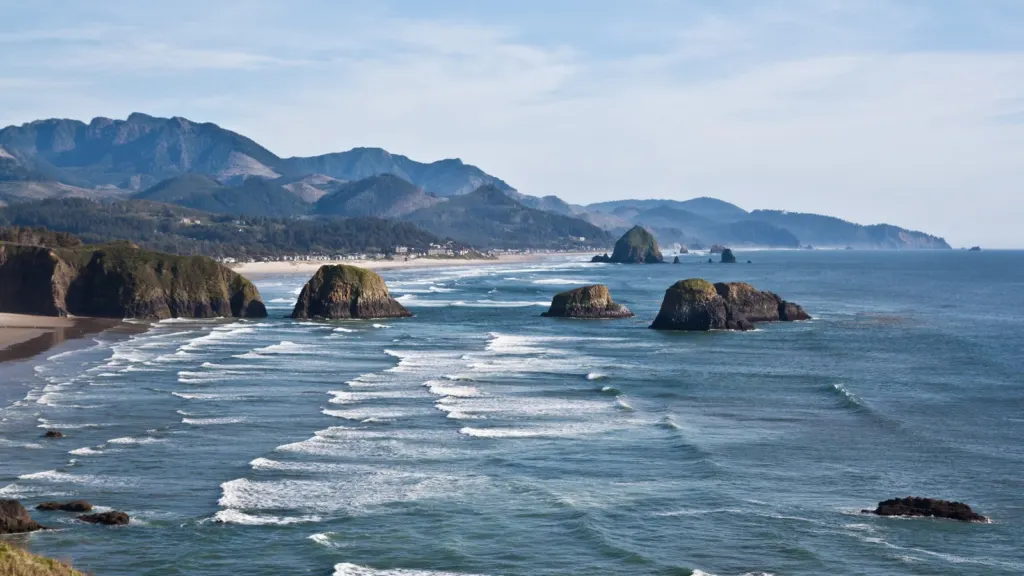
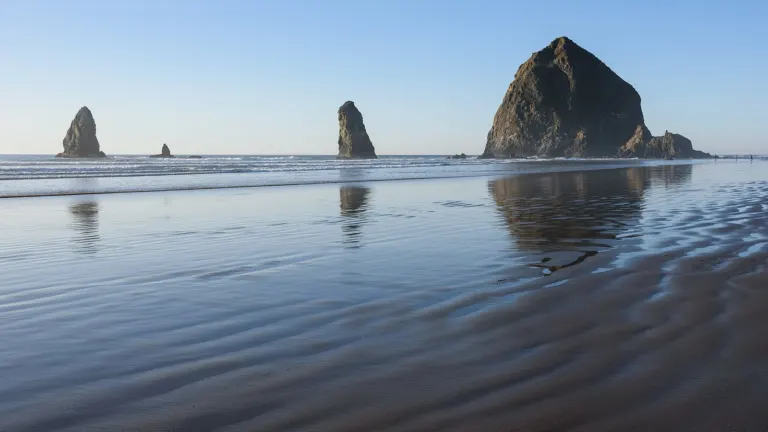
The shoreline near Cannon Beach. Strong El Niño winters bring higher water levels and bigger waves to the North Coast. Photo: Abhinaba Basu from Redmond, United States / Wikimedia Commons, CC BY 2.0
The tropical Pacific is running hotter than it has in most El Niño years on record, and federal forecasters now give better-than-even odds that this winter’s event will be the strongest since at least 1950. For the North Coast, that raises two practical questions: what kind of winter to expect, and what it could do to the beaches between Gearhart and Neskowin.
The Climate Prediction Center’s Nov. 12 ENSO discussion says El Niño strengthened again in October. Sea surface temperatures in the key Niño-3.4 region of the equatorial Pacific were 2.5 degrees Celsius above average, and closer to South America the anomaly reached 4.4 degrees. Forecasters put the chance of a strong to very strong event through January to March at more than 79%. They also estimate about a 60% chance that the October-to-January period will beat every El Niño in the record, which goes back to 1950.
That puts this winter in the company of 1982-83, 1997-98 and 2015-16, the three big events most coastal residents remember.
Not the usual El Niño forecast for Oregon
The usual rule of thumb is that El Niño brings the Pacific Northwest a mild, drier winter while California gets soaked, because the Pacific jet stream shifts south. CPC’s latest seasonal outlook, issued Oct. 15, still favors a warmer than normal November-through-January across the Pacific Northwest, with some of the strongest warm odds in the country stretching from the Northwest to the northern Plains.
Precipitation is less settled. The outlook says the stronger, southward-shifted jet raises the odds of a wet season along much of the West Coast, “including areas extending as far north as the Oregon coast.” Inland, the Northern Rockies lean dry. For Clatsop and Tillamook counties, which sit near the northern edge of that wet zone, the honest reading is that a very strong El Niño doesn’t guarantee a dry winter here. The next seasonal outlook comes out Nov. 19.
What 2015-16 did to the beaches
The more useful lesson may come from the last big event. A 2017 study in Nature Communications, led by U.S. Geological Survey geologist Patrick Barnard, measured winter wave energy and beach change at 29 sites from Washington to Southern California during the 2015-16 El Niño. Shoreline retreat across the West Coast averaged 76% above normal and was 27% higher than any other winter on record.
Oregon and Washington got off lighter than California. Oregon State University coastal hazards professor Peter Ruggiero, a co-author, said three mild winters before 2015 had piled up sand on Northwest beaches, and the region’s wide beaches helped protect dunes and buildings, according to an OSU announcement of the study. “It helped the Northwest offset the potential erosion from the El Niño,” he said.
He also flagged a risk that matters here. Warm water expands and storms push it ashore, so sea level along the coast runs high during El Niño. “In Oregon, the water was about 15-17 centimeters (roughly 6-7 inches) higher than average, which led to higher storm tides,” Ruggiero said. And recovery is slow. After 1997-98, he said, some beaches took a decade to rebuild.
Where the North Coast is exposed
Higher water and big swell do the most damage where the beach is already narrow or the road is already low. A few spots worth watching this winter:
- U.S. 101 at Seaside. ODOT is already studying a flood-prone stretch of the highway, where high tides and heavy rain combine.
- Low-lying neighborhoods along rivers and bays. Higher ocean levels slow drainage at high tide, which can back up rivers during heavy rain.
- Bars and harbors. Rough weather has already kept test boats from sampling Dungeness crab off Astoria and Garibaldi. A stormy winter means more days the Columbia River and Tillamook bars close to small boats.
Homeowners worried about water should know that most standard policies don’t cover flooding. We explained what flood, tsunami and earthquake coverage costs and covers on the North Coast. National Flood Insurance Program policies usually take 30 days to take effect, so waiting until a storm is in the forecast is too late.
CPC’s own discussion adds a caution: even a very strong El Niño only raises the odds of typical impacts, it doesn’t lock them in. The next ENSO update is due Dec. 10. More environment coverage is in our Energy & Environment section.
Add North Coast Oregon as a preferred source on Google (opens in a new tab)
 By
 By