ODOT spells out what no new money would mean for Oregon roads
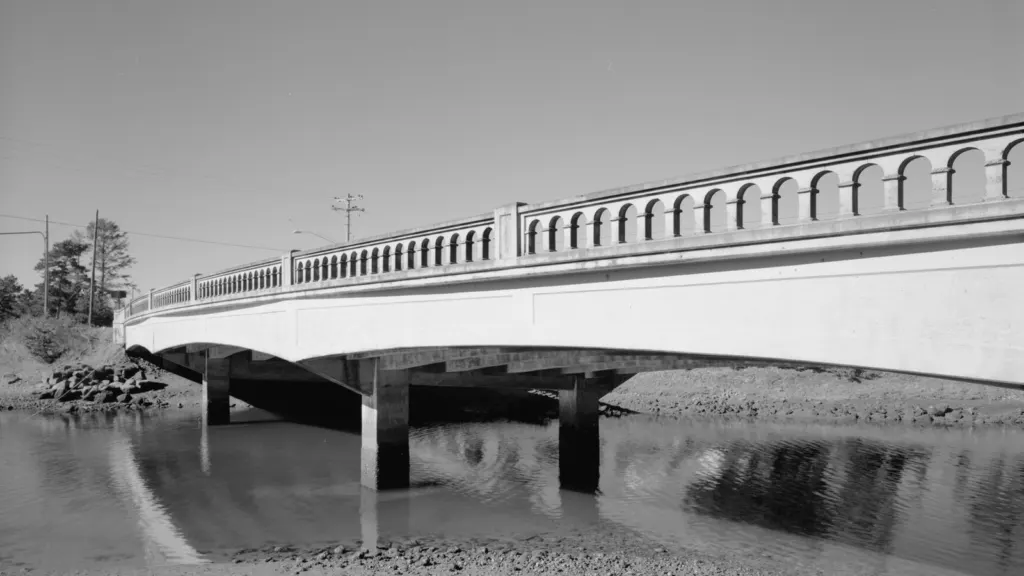
The U.S. 101 bridge over Neawanna Creek in Seaside. Photo: Historic American Engineering Record, Library of Congress, public domain, via Wikimedia Commons.
The state’s transportation agency spelled out this week what happens to Oregon’s roads if nobody finds it more money, and for a region that depends on two highways, the list is worth reading closely.
At a Nov. 10 meeting in Salem, Oregon Department of Transportation climate director Susan Peithman walked Gov. Tina Kotek’s transportation workgroup through a no-new-revenue scenario. ODOT is facing a roughly $200 million budget shortfall. Without a fix, she said, major construction would stall, maintenance would shift almost entirely to reactive repairs and emergency response, and road deaths and serious injuries would climb about 15% over the next decade, the Oregon Capital Chronicle reported.
Public transit statewide would be cut about 20%, affecting roughly 94,000 riders. Passenger rail would drop from two daily round trips to one in 2031 and end in 2032. About 40% of priority walking and biking routes would stay unfinished, and 30% fewer teenagers would get driver education.
What “reactive” means on the coast
The workgroup’s framing is statewide, but the maintenance piece lands hard here. Clatsop and Tillamook counties lean on U.S. 101 along the coast and U.S. 26 and Oregon 202 inland, and those roads already need regular work after winter storms, slides and high water. ODOT is currently asking Seaside residents for input on a flood-prone stretch of U.S. 101. In the agency’s own description of a no-new-money future, there would be less money for materials and repairs, more road closures, rougher pavement and slower responses to crashes and other incidents.
Cost overruns and lost tolling revenue elsewhere in the state would also pull money from bridge and seismic preservation work, Peithman told the group. That matters in a region where much of the highway network crosses rivers, sloughs and bays.
How Oregon got here
The shortfall has been building for several budget cycles. In 2025, Kotek pushed lawmakers to pass a package that would have raised about $4.3 billion over a decade through a higher gas tax, a payroll tax and higher registration and title fees. A Republican-led referendum put it on the May ballot, and more than 80% of voters rejected it.
Kotek has since changed course. At a press conference last week she said her 2027 budget would require ODOT to live within existing revenue. “Now that’s a trade-off, because that means taking money away from highway projects and other things to pay for basic operations and maintenance,” she said. Republicans have argued for years that the agency should rearrange the money it already has. If lawmakers want something different, Kotek said, they will have to “come to the table.”
The numbers on the table
The 12-member workgroup has until Dec. 15 to send Kotek three investment scenarios, ways to pay for them and proposals to make the agency more accountable. It meets again Nov. 19 to pick the three.
Two scenarios discussed this week show the range:
- A maintenance-first option would need about $644 million a year in new money, with 73% going to maintenance and operations and nothing for major construction or non-highway projects.
- A broader option covering maintenance, transit, major projects, safety, rail and walking and biking routes would need about $1.38 billion a year. More than 60% would go to operations and maintenance, about a quarter to transit, 7% to major projects and 4% to non-highway infrastructure.
No new funding would also block 30 projects in the Connect Oregon program, which pays for non-highway work such as ports, rail and aviation. Workgroup member Gale Castillo, the former longtime president of the Hispanic Metropolitan Chamber, said Oregon’s freight system is how goods reach national and international markets. “Without that, we don’t have access to those markets,” she said.
Whatever the workgroup recommends goes to the 2027 Legislature, where North Coast lawmakers will have a say on how much of any new money, or any reshuffled money, reaches rural highways. The workgroup’s materials are posted on the governor’s website.
Add North Coast Oregon as a preferred source on Google (opens in a new tab)