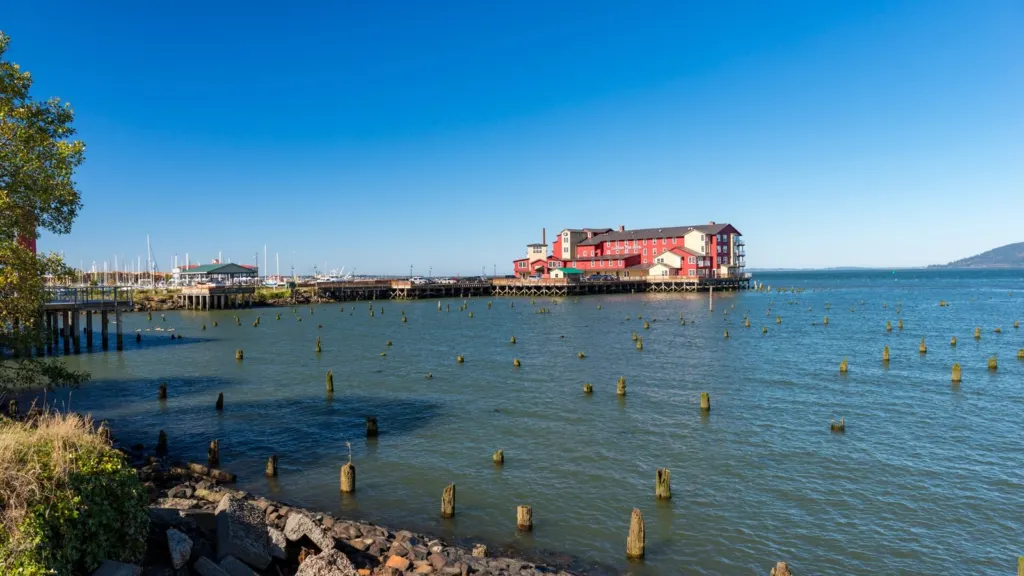
A hotel on old cannery pilings in the Columbia
Photo: Gary Halvorson, Oregon State Archives, CC BY 4.0, via Wikimedia Commons.
Astoria’s salmon canneries were built over the water, on pilings, so that fish could be unloaded straight from boats to the cutting floor. At the industry’s height in the late 1800s there were dozens of them along the Columbia, and the river’s waterfront was a near-continuous line of plank docks and sheds.
The Cannery Pier Hotel sits on one of those sites, about 600 feet out into the river just west of the Astoria-Megler Bridge, on pilings once used by the Union Fish cannery. The hotel opened in 2005, with rooms facing the shipping channel so close that guests can watch cargo ships and bar pilots pass at eye level.
From fish to tourism
The building’s design borrows from the cannery architecture around it, with board-and-batten siding and a long pier approach. Inside, the hotel uses historic photographs of the fishing industry, which shut down cannery by cannery through the 20th century as salmon runs declined and processing moved elsewhere. Bumble Bee, which had grown out of Astoria’s packing companies, closed its last local operation in 1980.
The project fits a pattern seen up and down the river. Pilings and piers that once held fish processing now carry hotels, restaurants and breweries. It brings in money, but in jobs that pay less and run more seasonally than the work they replaced.
Building over water
Developments over the Columbia are not simple. Old pilings have to be inspected and often replaced, and work in the river requires permits that consider salmon habitat. That process has slowed or stopped several later waterfront proposals in Astoria, and the city has adopted rules limiting new over-water building in parts of the riverfront.
More in Business

Carnegie Mellon University Names Jason Brown Next Director and CEO of the Software Engineering Institute
 By Joel Koskinen ·
An Astoria couple built the food cart bar they kept finding everywhere but home
By Joel Koskinen ·

Prestigious ISTE Seal Opens New Doors for Classroom Learning as KOIN Continues its Transformational Rollout with uReport
By Joel Koskinen ·